
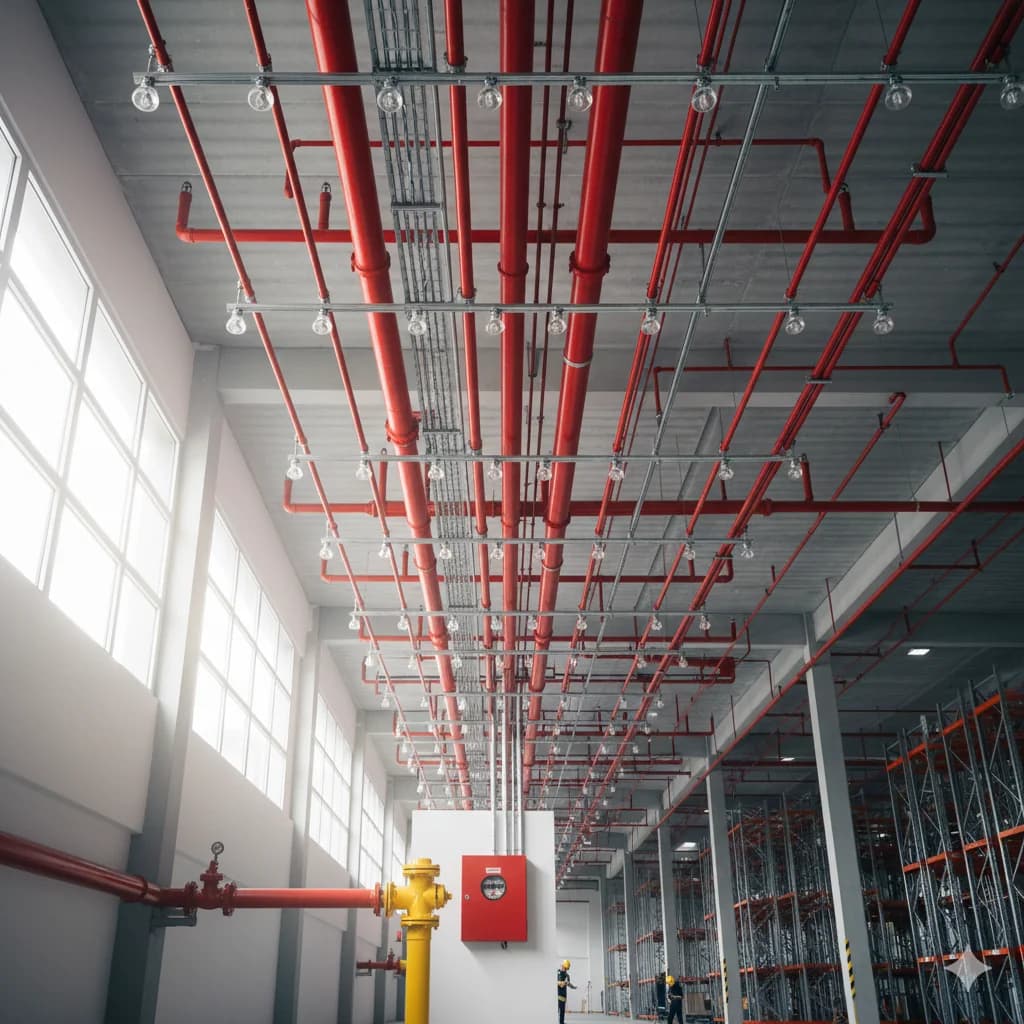
When a plant’s fire system fails, the loss of life, property, and revenue is immediate and irreversible. Delhi NCR’s industrial corridors demand more than a checklist; they require a partner who lives the code daily. That partner is Maha Firefighters, the city’s go‑to fire safety company in Delhi, known for turning statutory compliance into a competitive advantage.
Why NBC‑2016 Part 4 is the non‑negotiable baseline for every facility
The National Building Code’s Part 4 is the hard law that governs water supply, hydrants, and sprinklers. Most audits hit the gauge needles on extinguishers, but the real risk lies in the pressure loop that feeds the sprinkler head. In an audit of a petrochemical plant in Noida, the NOC was denied because the main fire pump had a 5‑minute lag before reaching 3 bar – the required operating pressure for wet‑pipe systems per NBC. Fix that pump, and the rest of the system is suddenly compliant.
Step‑by‑step: Quick hydraulic check that saves NOC time
- Verify that the diesel booster pump is rated for 3 bar at 500 L/min.
- Check the pressure switch: it must trigger at 2.8 bar, not 3.2 bar.
- Run a 10‑second burst test; the pressure should stay within ±10% of setpoint.
- Document the test with a signed log; the Delhi Fire Service will request it during the final inspection.
Hydrant vs. Sprinkler – which protects your yard first?
In high‑risk zones like the industrial park at Gurugram, a dual network is standard. Hydrants give quick, localized suppression for equipment fires, while sprinklers blanket the entire floor. The code prefers sprinklers for high‑pile storage but allows hydrants in areas with limited water mains.
IS 3844 compliance checklist for yard hydrants
- Spacing no more than 200 m in open areas.
- Landing valves with 1.5 bar rating for 30 L/min flow.
- Backflow preventers tested annually.
Concrete cost savings from a well‑designed sprinkler grid
Installing a wet‑pipe sprinkler grid with quartz bulb heads can cut potential fire losses by up to 40%. The IS 15105 standard mandates a minimum density of 0.5 kg/m³ for high‑pile storage, which translates to a 15 % water savings over traditional foam systems.
In the field, I’ve seen the most expensive sprinkler failures stem from using a pressure‑boosting pump rated too low for the system’s head loss. Don’t underspecify; the code is unforgiving.
What makes Maha Firefighters the benchmark in Delhi NCR
Our automatic fire sprinkler systems are installed by engineers who have spent 10,000+ hours in situ audits. We perform on‑site hydraulic testing up to 30 bar, per IS 2190, ensuring every sprinkler head delivers the required flow.
For businesses that rely on continuous production, we design a redundant pressure loop so that a single pump failure never translates to a fire‑system outage.
How to pass your next Fire NOC inspection without surprises
Bring a signed hydraulic calculation, a recent pressure test log, and a certified pump inspection report. The Delhi Fire Service will verify each against NBC Part 4. Any deviation, no matter how small, can lead to a denial.
Common Questions from Facility Managers
What is the minimum operating pressure for wet‑pipe sprinklers?
The NBC requires a minimum of 3 bar at the sprinkler head for wet‑pipe systems. Most commercial buildings in Delhi use 4 bar to accommodate pressure drops.
How often must fire hydrants be inspected?
Under IS 3844, hydrants need a visual inspection every 12 months and a functional test every 6 months.
Can I retrofit sprinklers onto an existing building?
Yes, but you must conduct a full hydraulic analysis and obtain a new NOC. Retrofits are common in older malls in Okhla where the code has been updated since construction.
What is the cost of installing a sprinkler system per square meter?
On average, wet‑pipe installations in industrial warehouses cost between ₹3,500 and ₹5,000 per m², depending on head density and pipe material.
In the heat of an audit, remember: the single most decisive factor is the pressure loop’s reliability. Test it, certify it, and the rest will follow.