
Different Mechanisms, Different Purposes
For facility managers and warehouse builders across Delhi NCR, fire protection is not a single decision—it is a layered engineering strategy. Two of the most critical components in any industrial layout are the automatic fire sprinkler system and the fire hydrant installation. While both deliver water for fire suppression, they serve fundamentally different roles.
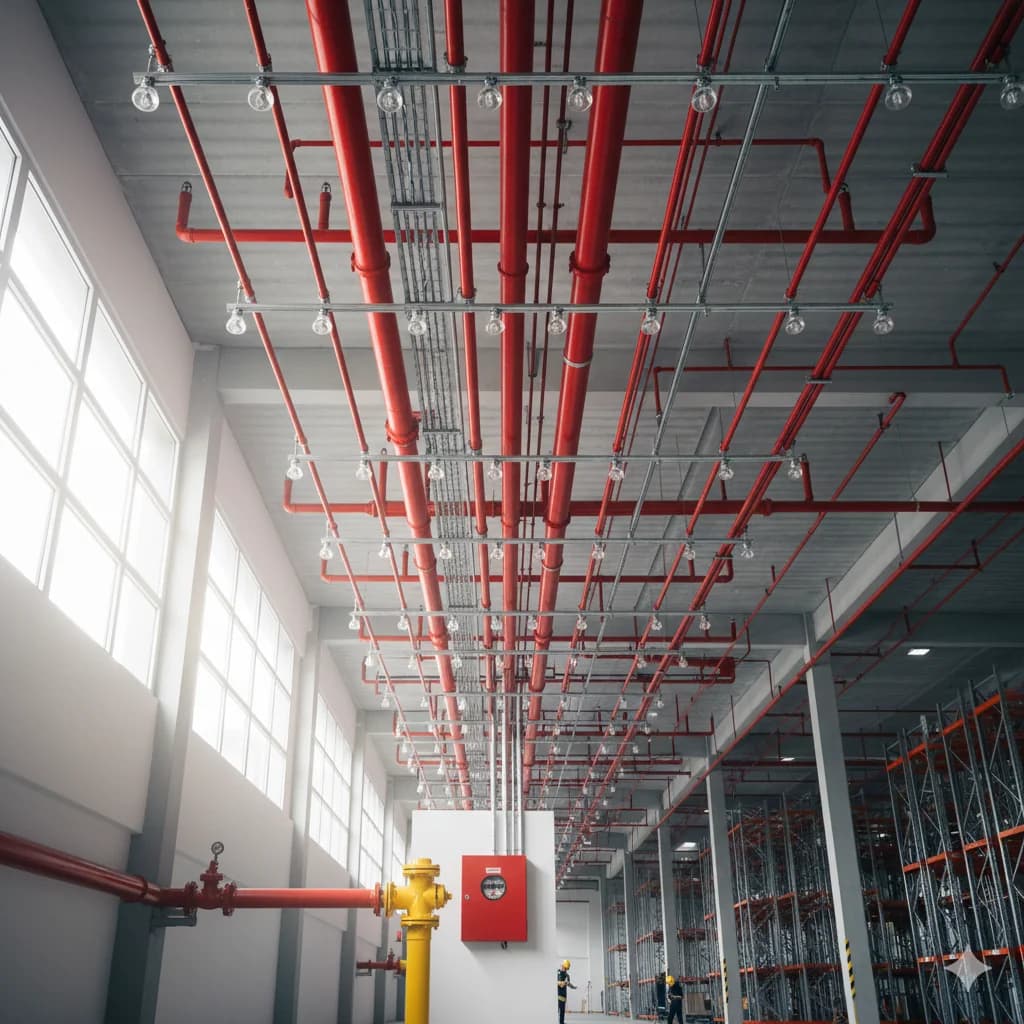
A fire hydrant system is a manual, high-volume intervention tool. It consists of a network of risers, pipes, valves, and hose connections strategically placed throughout the facility. When a fire is detected, trained personnel must physically connect hoses, open the valve, and direct a powerful stream of water onto the fire. Hydrants deliver massive quantities of water over a long duration, making them essential for controlling large fires.
An automatic sprinkler system, by contrast, operates without human intervention. Each sprinkler head is individually heat-activated. When temperatures at the ceiling rise to a predetermined level—typically between 68°C and 79°C—the thermal bulb bursts, releasing water directly over the fire source. Only the heads in the affected area activate, limiting water damage and suppressing fire at its earliest stage.
Hydraulics and Design Standards
From an engineering standpoint, sprinklers and hydrants require distinct hydraulic calculations:
Sprinkler systems are governed by IS 15105 and designed around "discharge density"—the number of litres per minute per square metre of floor area. Hazard classification (light, ordinary, or high) dictates density, pipe sizing, and maximum allowable floor area per sprinkler head.
Fire hydrant systems are governed by IS 3844. Hydrant risers must be sized to deliver multiple simultaneous hose streams at sufficient pressure (often 3.5 to 7 bar depending on system design) to reach the furthest corner of the facility. While a sprinkler head may discharge around 80 litres per minute, a single hydrant stream discharges several hundred litres per minute, requiring dedicated high-capacity storage and multi-stage pumps.
Why Dual-Layer Fire Protection Matters
For most industrial and commercial facilities in Delhi NCR, neither system alone is sufficient. The fire sprinkler vs fire hydrant comparison is not a competition—it is a complementary partnership.
The sprinkler system is your first line of defense. It attacks the fire in its incipient stage, containing it to a small area and buying critical time for occupant evacuation. The hydrant system is your second line of defense, providing manual firefighting capability needed to extinguish large fires or cool adjacent structures and equipment.
NBC 2016 Part 4 explicitly recognizes this layered approach, mandating both systems for high-hazard industrial occupancies and warehouses with tall racking. A well-engineered dual-layer design ensures that if one system is outmatched, the other is fully primed to respond.
The Delhi NCR Context & Next Steps
Facility managers and industrial builders across Noida, Gurugram, Ghaziabad, and Faridabad face regional challenges: water supply constraints, electrical voltage variations, and statutory fire inspections. A reliable dual-layer setup incorporates dedicated static water reservoirs, automatic jockey pumps, and diesel-driven backup pumps to guarantee operation during municipal grid failure.
When designing or retrofitting an industrial fire protection system, engage experienced engineers who understand both IS 15105 and IS 3844 hydraulic parameters. Proper engineering safeguards personnel, protects capital assets, and ensures seamless statutory Fire NOC approvals.